At Hughes Construction, we’re committed to providing reliable, long-term solutions for foundation issues.
While there are many methods available for foundation repair, some—like tie-backs—can lead to ongoing problems if not properly maintained. Today, we’d like to share a story about one of our clients who experienced the consequences of relying on tie-back repairs and how we were able to help.
What Are Tie-Backs?

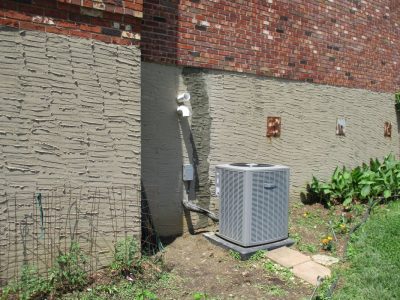
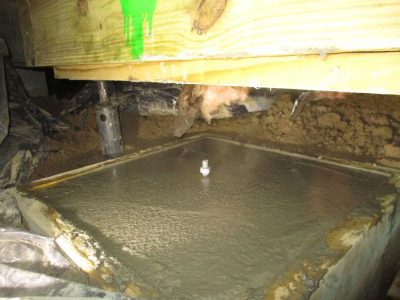
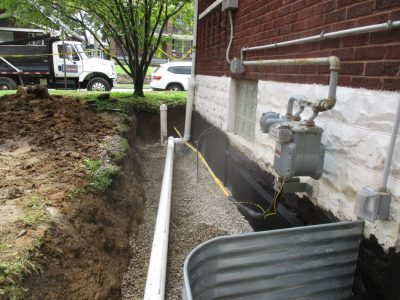
Tie-backs are a type of foundation repair. They typically consist of steel rods, usually about an inch in diameter, that are anchored into concrete cubes installed outside of the foundation wall. These rods are then tensioned by tightening nuts on the ends, which helps to stabilize the wall and prevent further movement. The goal is to pull the wall back into place and secure it, restoring its structural integrity.
The Issue: Lack of Ongoing Maintenance
One of our clients, who had previously hired an unnamed competitor, had tie-backs installed in an attempt to address foundation movement in their home. However, tie-back systems require ongoing maintenance—specifically, the nuts must be periodically tightened to ensure the rods are pulling the wall back into place as intended.
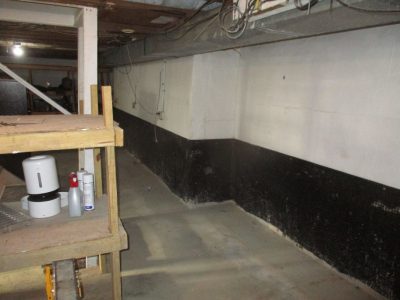
Unfortunately, the company that installed the tie-backs failed to return and perform this maintenance. Over time, the wall rotated outward, and the pressure that was initially applied through the tie-backs started to loosen. To make matters worse, a crack that had been previously patched with cement reopened, signaling that the underlying issue was far from resolved.
The Engineer’s Assessment
Recognizing the issue, our client sought the help of an engineer to get to the bottom of the situation. The engineer found that the original repair was serviceable at the time of installation. However, without regular tightening of the tie-back system, the wall’s movement had continued, and the crack had reappeared.
The engineer’s recommendation? While the repair remained technically still serviceable, the crack must be properly addressed. They suggested using an epoxy injection to fill the crack to reinforce the wall and prevent any future water infiltration.
How We Helped
We carefully injected epoxy into the crack, ensuring that the structure would remain watertight and stable.
The Bottom Line
While tie-backs are a common option for foundation repair, they require constant maintenance and monitoring to ensure their effectiveness. Without regular attention, the foundation wall may continue to shift. When that happens, repairs can quickly become ineffective or even worse, cause more damage. For this reason, we do not install tie-backs at Hughes Construction. We only offer permanent solutions for foundation issues, using advanced methods that don’t require ongoing maintenance. Our goal is to provide you with lasting peace of mind, knowing that your foundation is secure for the long term.
If you’re facing foundation problems and want to make sure you’re getting the best solution, reach out to us today. We’ll be happy to recommend an engineer to help ensure you get the most effective, long-lasting repair option.