Dry Well Drainage: When There’s Nowhere Else for Melting Snow or Rain to Go
With this week’s rapid snow thaw, some tri-state homeowners are seeing something they haven’t noticed before — standing water that doesn’t seem to move. When snow melts quickly, the ground is often still frozen, which means water can’t absorb properly. On flat properties, that water has nowhere to go.
Most drainage problems have a clear solution: collect water near the foundation and move it downhill, away from the home. But some properties offer no natural discharge point at all.
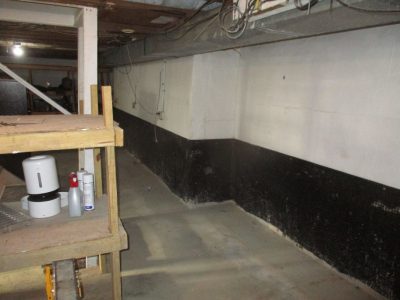
We completed a project last year where poor drainage played a major role in a collapsed foundation wall. The home sat on a completely flat lot with no slope to move water away. During heavy rain, water collected around the foundation year after year. Over time, that constant moisture and pressure led to serious structural failure.
In situations like this, traditional gravity drainage does not work.
That’s where dry wells come in.

How a Dry Well Works
A dry well is an underground drainage solution for properties where water cannot be redirected elsewhere. Instead of sending water downhill, the system gives it a controlled place to go.

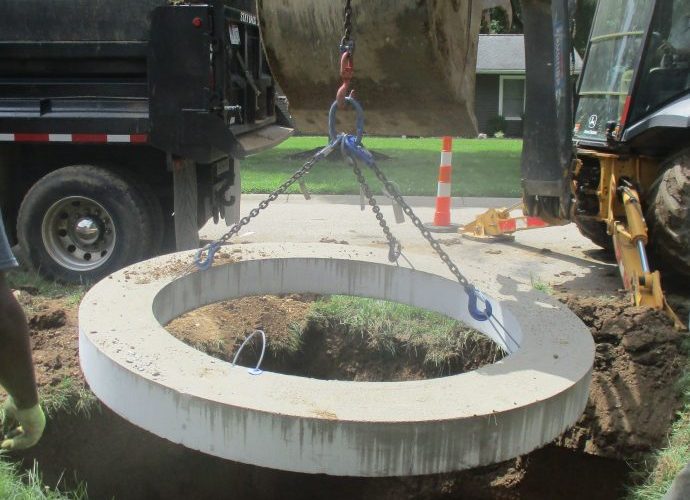
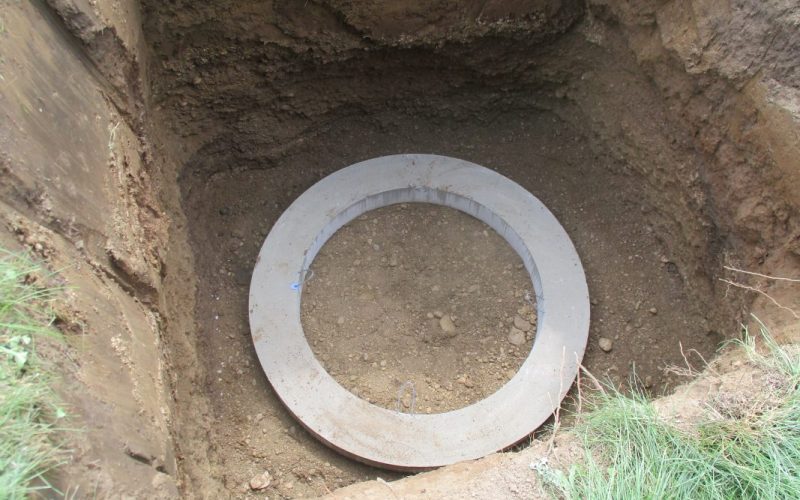
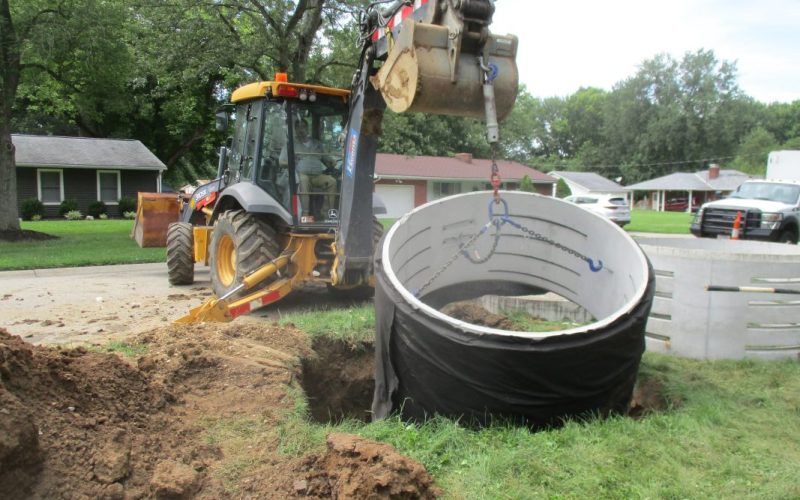
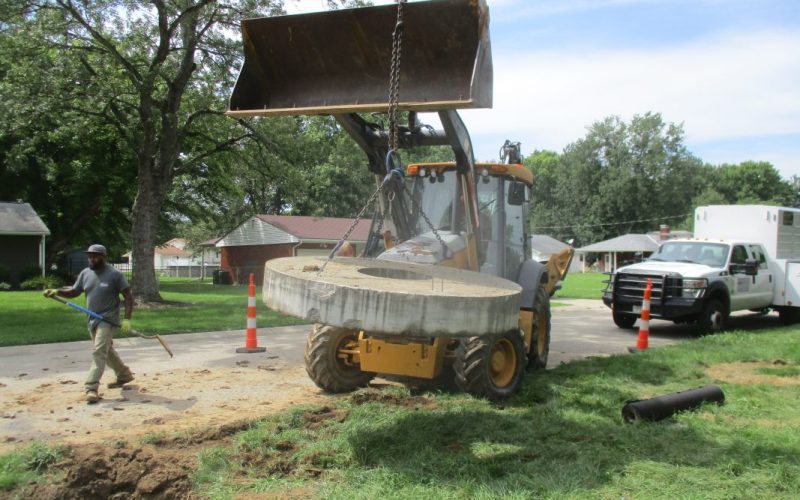
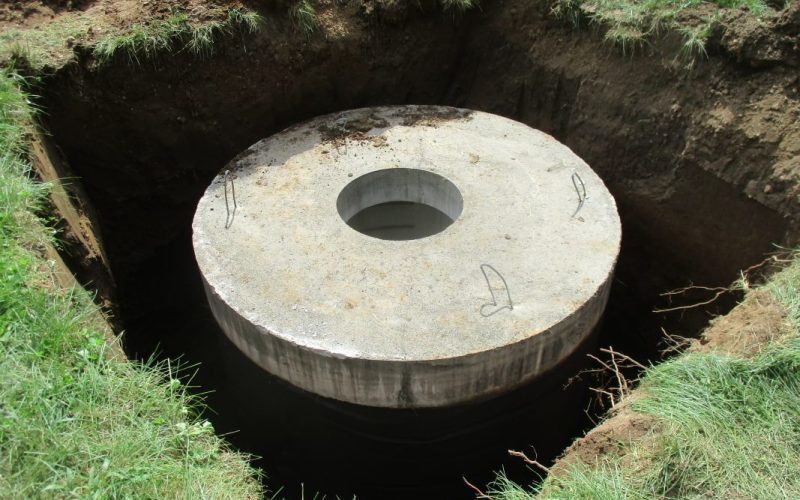
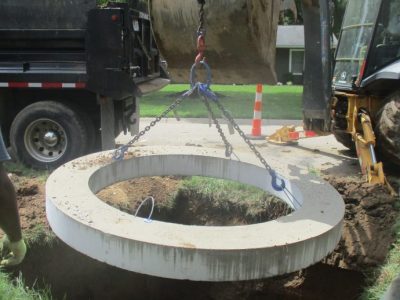
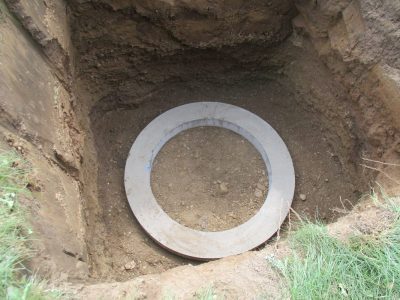
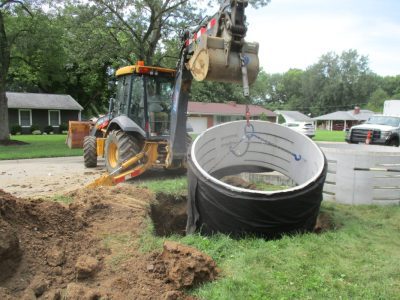
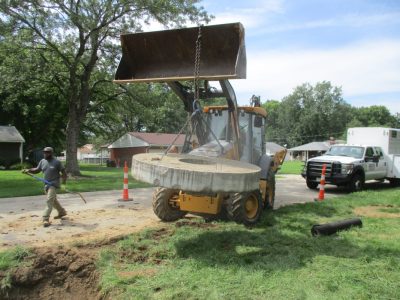
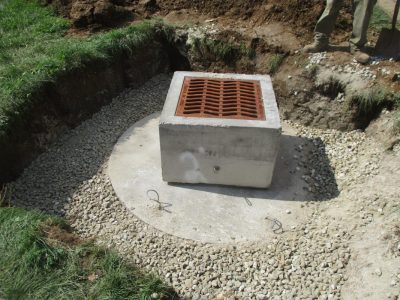
For this project, we installed the dry wells using precast concrete components designed for long-term durability provided by the City of Fairfield. Each dry well consisted of five pieces: a one-foot concrete base, two three-foot concrete rings with slotted openings, and a one-foot concrete top.
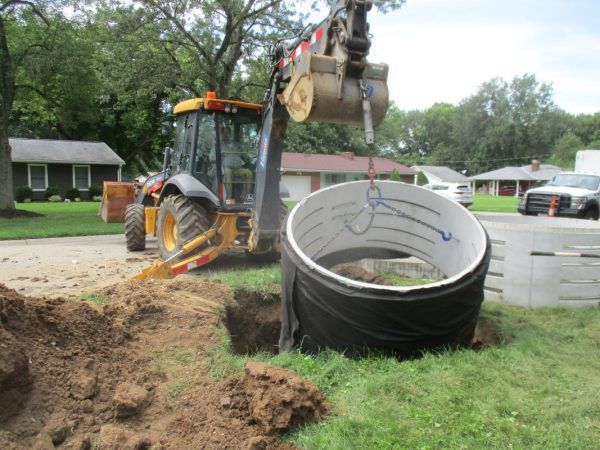
The slotted rings allow water to disperse slowly into the surrounding soil instead of pooling near the foundation. We wrapped those rings in drainage fabric before backfilling to reduce the risk of soil intrusion and future clogging.
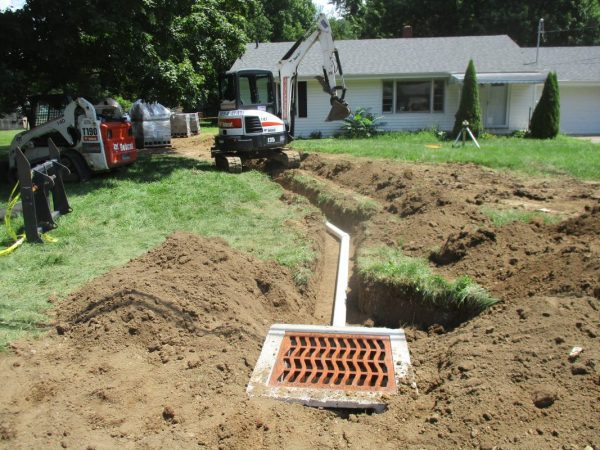
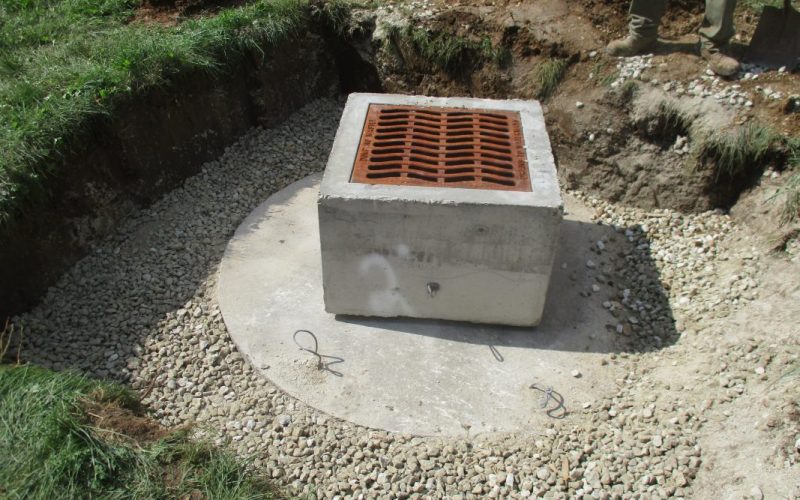
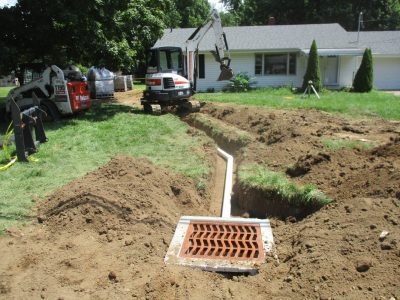
Above the dry well, we installed a 2′ x 2′ catch basin. The basin collects surface water and connects directly to the home’s downspouts. This setup allows roof runoff and ground-level water to enter the system efficiently.
Once water enters the dry well, it stores underground temporarily and releases gradually into the soil. This process reduces hydrostatic pressure and limits future water buildup near the foundation.
Our Role in the Project
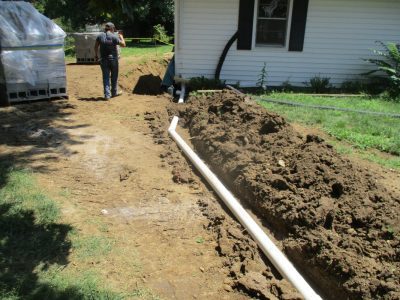
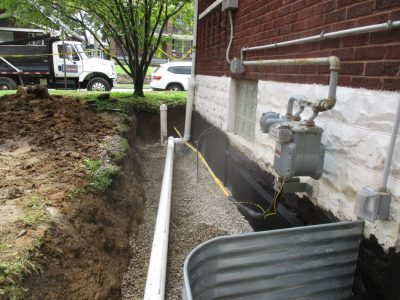
We installed the dry wells and ran new drainage lines to the system. We used Schedule 40 PVC piping to ensure proper flow and long-term performance. Our goal was to intercept water before it reached the foundation and give it a safe place to go, even on a flat lot.
When Dry Wells Make Sense
Dry wells work best on properties with flat grades and no downhill discharge option. They also make sense where water consistently collects near the foundation and other drainage methods have failed.
Dry wells are not a universal fix. In the right conditions, however, they can play a critical role in protecting a home from ongoing water damage.
If you’re dealing with persistent water issues and feel like you’re out of options, contact us to learn about our drainage consultation services today.