Restoring a Failing Archway
We recently restored a stunning stone arch entryway on a 20-year-old home. In classic masonry, an arch relies on compression—the weight of the stones pressing against each other to lock the structure into place using nothing but gravity. In this case, however, a flaw in the original design or installation meant the stones weren’t properly ‘locking,’ causing the arch to shift and fail.

Identifying the Problem
As the stone shifted, the brick above started to crack in a stair-step pattern. This type of cracking often signals structural movement. Left unaddressed, the issue would progressively worsen. Because arches rely on precise weight distribution, even small shifts can create larger problems.
Engineering and Preparation
To ensure a proper repair, the homeowner contracted with AO Engineers to obtain detailed plans. These plans guided every step of the project. Once finalized, we moved forward with the repair.
Our Strategy
While we follow the engineer’s guidance on the method of repair, the implementation is where we get to be a little creative. In this instance, we proposed a solution that only required removing the bricks on one side. A competitor had proposed removing the whole thing and rebuilding it. The job would have been done properly either way, but our approach saved the homeowner nearly $20,000.
Precision Repair Process
Our crew began by installing shoring to support the arch. This step stabilized the structure before we removed any material.

Once secure, we were able to remove some of the brick on the inside portion of the arch to access the interior.
Next, we focused on resetting the arch and center stone. We created a platform on top of our shoring tower and carefully raised the pieces back into place using bottle jacks. This allowed us to raise the stone slowly and safely, guiding it back into its original position without causing further damage.
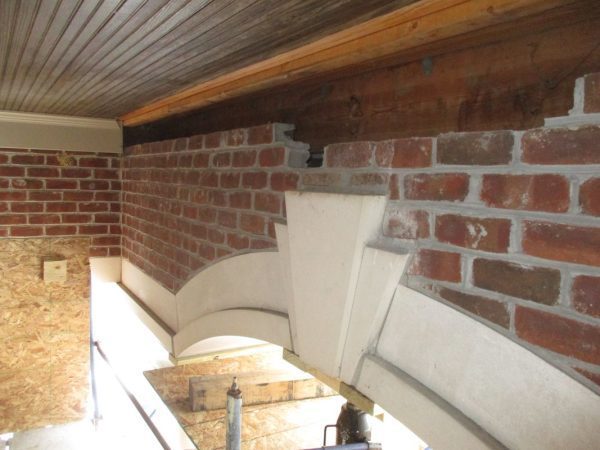
This part of the job required patience and precision. Every adjustment mattered, and we monitored the structure closely throughout the process.
Once the stone pieces were back in place, we installed two new steel angles above the stone arch according to the engineer’s specifications. To align and stabilize these angles further, we welded them together.
Using threaded rods embedded in the stone with epoxy, we attached the arch to the new angles. We made sure each was securely fastened before tightening the nuts and locking them in place.

Rebuilding and Final Results
After we repositioned the stone, we rebuilt the brickwork to blend in naturally with the original design.
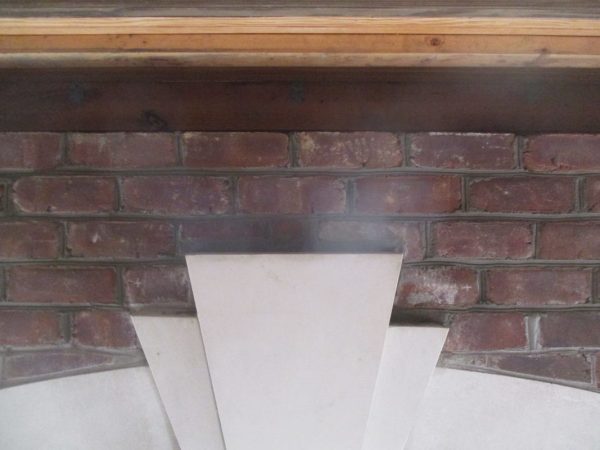
The finished result restored both the strength and appearance of the arch. More importantly, it ensures long-term stability. The entryway now looks as it should and will remain secure for years to come.
Do you have a failing archway or another challenging structural problem? Contact us for guidance and more information.