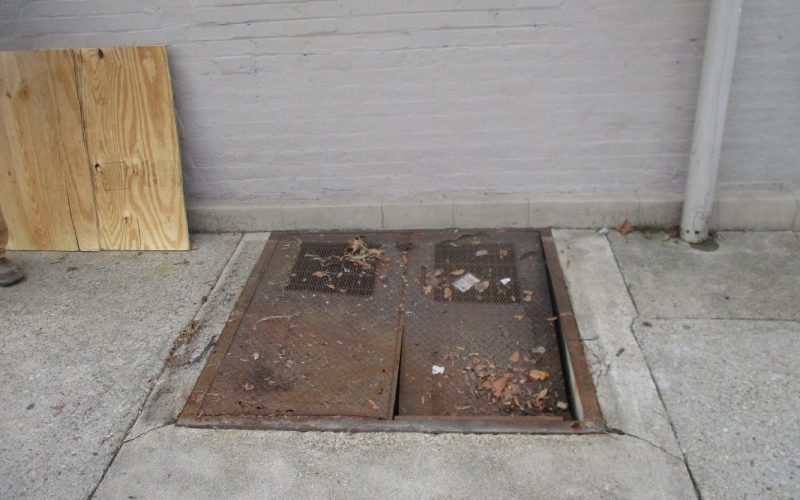
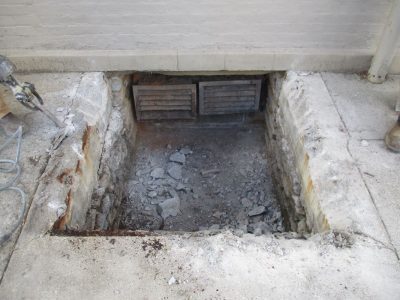
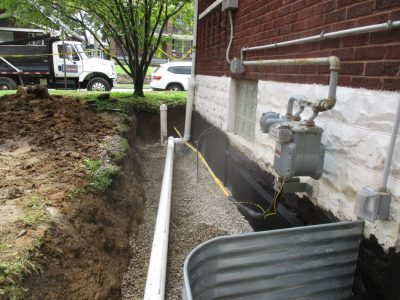
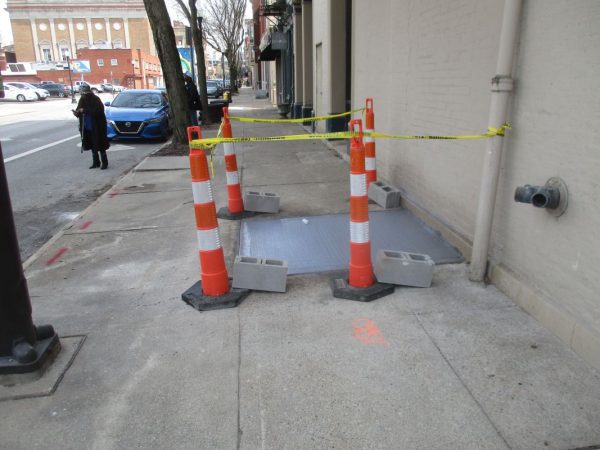
When a law firm in downtown Cincinnati received a citation for an aging coal chute on the side of its historic building, the clock started ticking immediately. The city gave them a strict 30-day window to have a certified repair plan in place. Consequently, they faced escalating daily fines if they failed to meet this deadline. For many property owners, a citation involving the “Right of Way” feels like a logistical nightmare. However, for us, it was just another day at the office.
A Relic of the Queen City’s Past
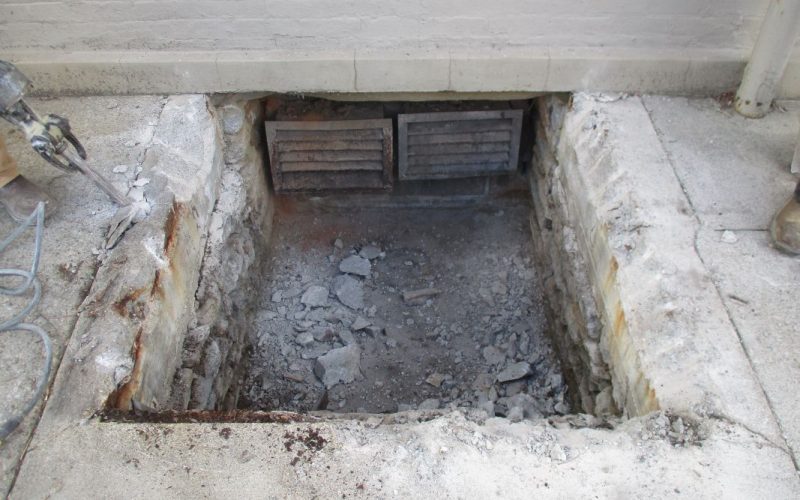
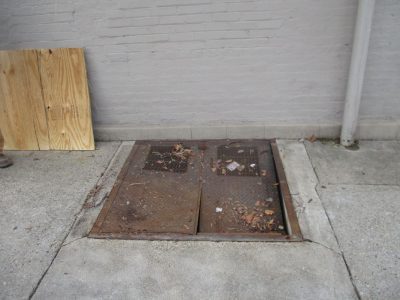
In the 19th and early 20th centuries, coal powered the majority of Cincinnati. Most buildings featured coal chutes—small openings in the sidewalk or foundation wall. Workers dumped coal directly through these openings into the basement furnace room. As the city transitioned to natural gas and electricity, owners often abandoned these chutes. Over decades, the iron covers and masonry surround inevitably deteriorate. Furthermore, this neglect creates several critical hazards: trip hazards on public sidewalks, structural instability in foundation walls, water intrusion points that lead to basement flooding, and access points for pests to enter the building. Because these chutes often extend under or into the city sidewalk, repairing them isn’t as simple as pouring a little concrete. Instead, it requires a contractor who understands the intersection of private property and public safety.
Why Experience Matters in the “Right of Way”
The law firm required a partner who could navigate the bureaucracy of downtown construction. We were uniquely situated to help because we maintain the specific municipal bonding and licensing required to perform work on city-owned property. Additionally, we knew exactly which “Right of Way” permits were required to block off pedestrian traffic safely and legally. Specifically, having handled numerous coal chute closures and foundation repairs throughout Cincinnati, we already had a blueprint for success ready to go.
The Solution: A Future-Proof Repair
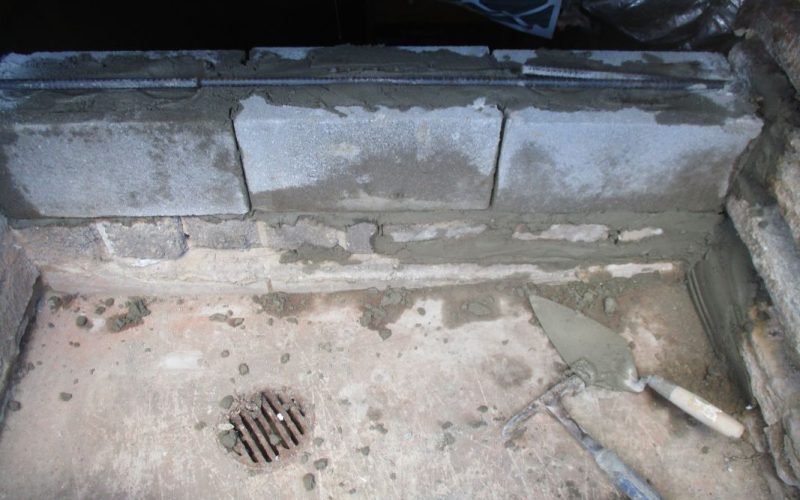
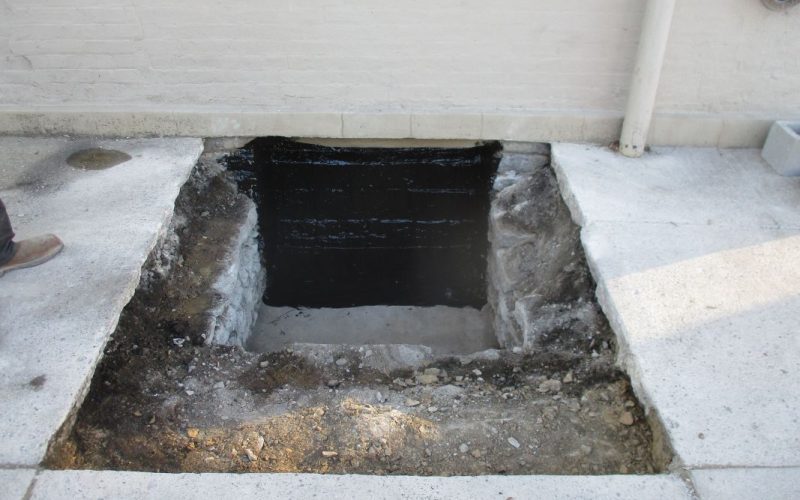
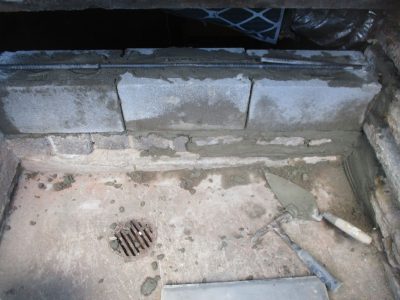
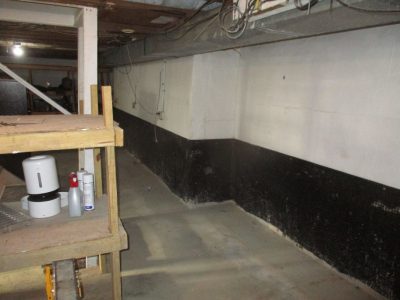
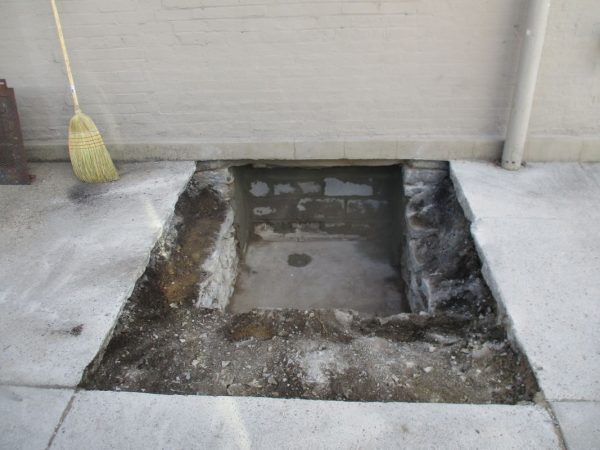
Our approach for this project prioritized long-term structural integrity while remaining “future-proof” for the City of Cincinnati. Specifically, we executed the repair in four strategic steps: First, we blocked up the opening in the building foundation wall with solid masonry. This ensures the building envelope remains secure and prevents any future moisture from entering the basement.
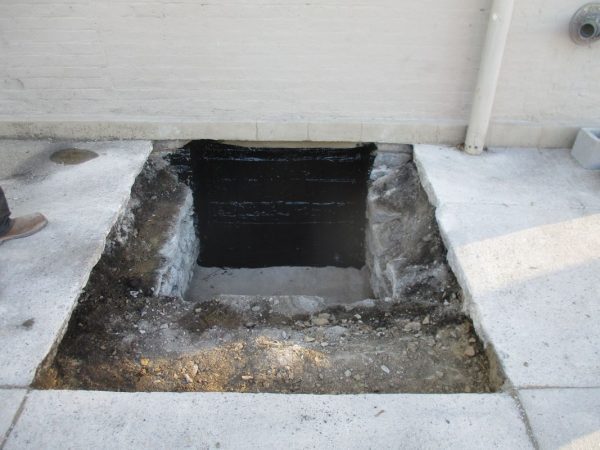
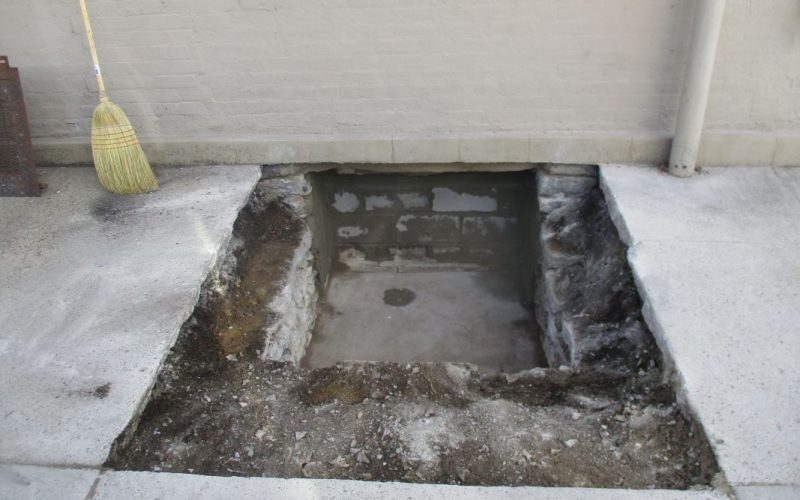
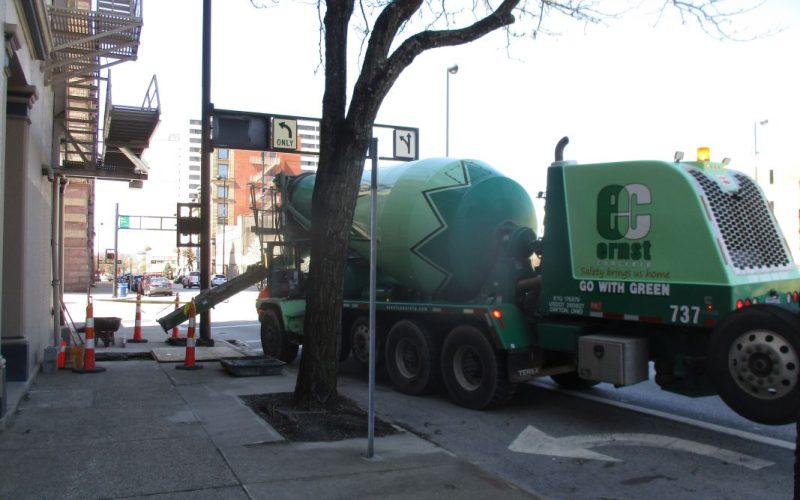
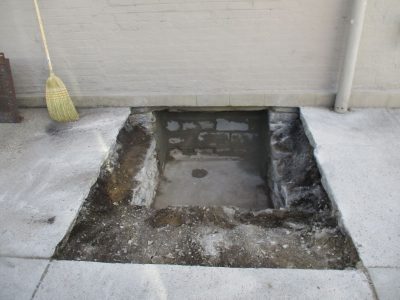
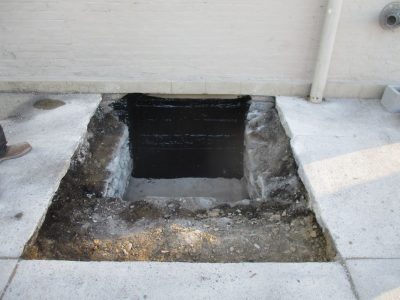
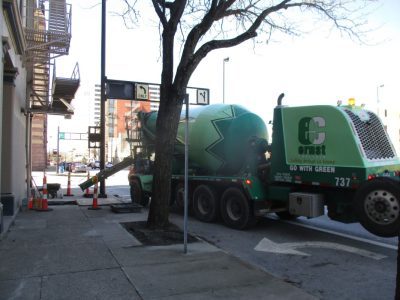
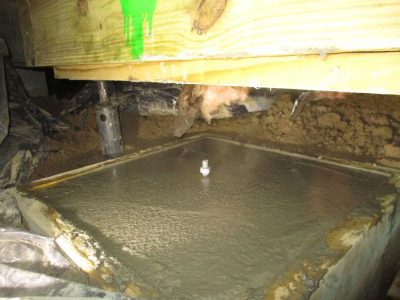
Next, we applied a high-grade waterproofing membrane to the exterior of the new masonry. This step ensures the basement stays dry for decades to come. Following that, we utilized flowable fill to pack the void beneath the sidewalk rather than using standard dirt or stone. This material is structurally sound but remains “excavatable.” Consequently, if the city ever needs to perform sidewalk or utility work, workers can remove the material without damaging the building.
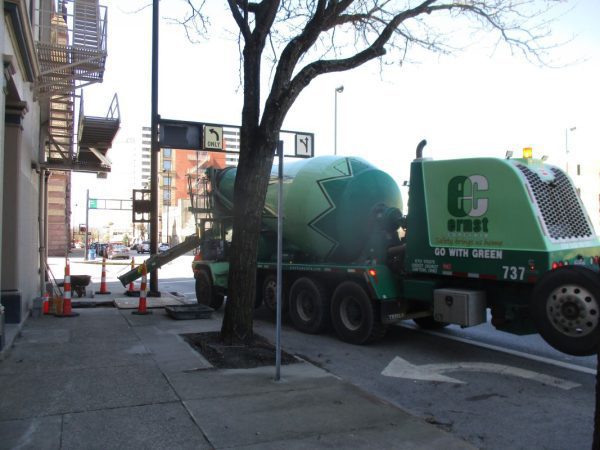
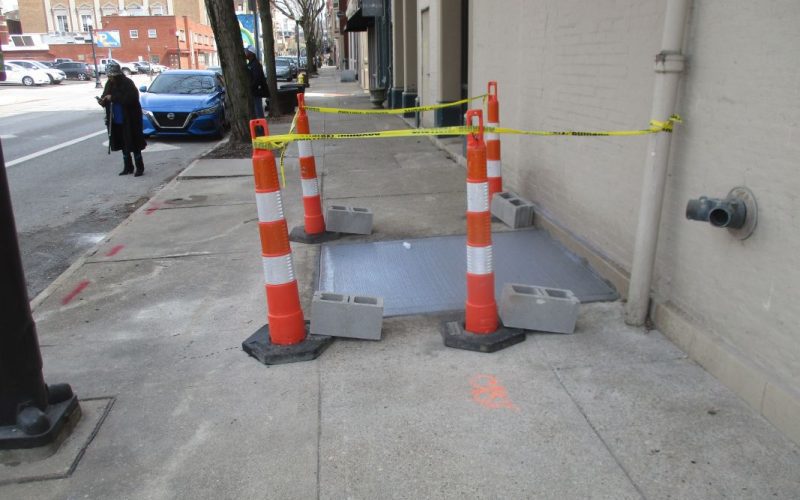
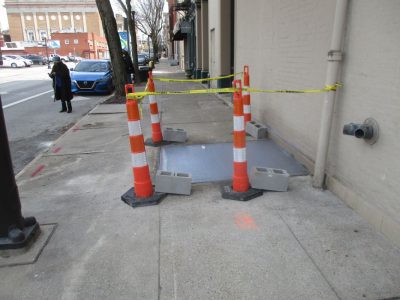
Finally, we removed the rusted metal grate and replaced it with a seamless concrete slab, which returned the sidewalk to a safe, walkable, and citation-free condition.
The Result
By moving quickly, we got the repair plan approved by the city and completed all within the 30-day window. As a result, we saved the client from significant potential fines. The law firm now has a dry basement, a stable foundation, and a sidewalk that meets all modern safety codes. Dealing with a city citation? Don’t let the clock run out. Reach out to us today!