In Cincinnati’s historic Gaslight Clifton neighborhood, aging stone retaining walls literally hold up the landscape.
These structures are a staple of our hilly terrain, but they present unique challenges when a foundation fails. We recently completed a project where a homeowner noticed a long, concerning crack in their garage, just above a retaining wall. They took the right step and hired a licensed structural engineer to assess the movement. Based on that professional report, we stepped in to install a permanent stabilization.

The Challenge: Saving the Retaining Wall
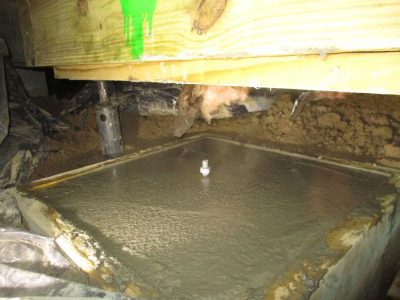
To provide deep structural support for the garage foundation while preserving the historic stone wall, we utilized helical piles per the engineer’s recommendations. Their small footprint allowed for installation directly alongside the existing stonework, avoiding the high cost and aesthetic impact of a full demolition. By transferring the structural load to stable, load-bearing soil, we successfully halted the settlement and stabilized the garage without compromising the integrity of the historic masonry.

Drainage: From Temporary to Permanent
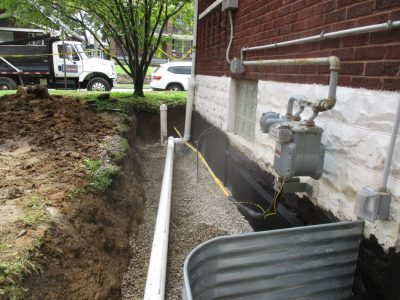
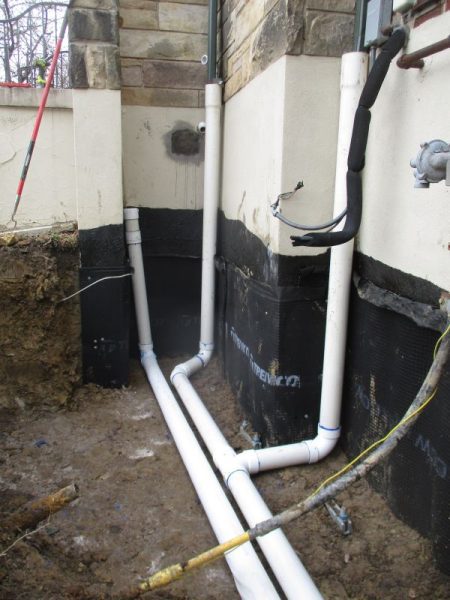
Proper water management is the best way to protect any foundation. The existing setup used corrugated plastic pipe running above ground—an unattractive solution prone to clogging and damage. We replaced this with permanent Schedule-40 PVC. By burying the line and discharging it at the bottom of the retaining wall, we ensured water moves safely away from the home through a durable, high-capacity pipe designed to last.
Waterproofing
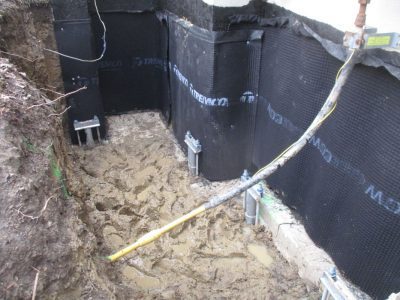
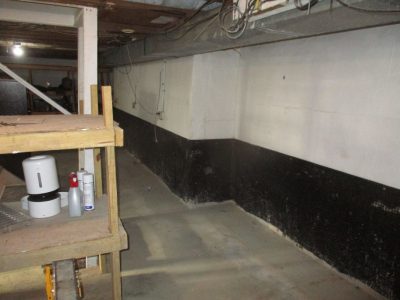
Initially, the homeowner considered skipping the added expense of waterproofing. However, the value of a permanent fix became clear once we began the excavation. By choosing to waterproof the foundation while the area was already open, the homeowner secured the structure against future water intrusion. This turned a repair into a long-term investment and ensured they would never have to excavate this specific area again.

Gravel vs. Soil
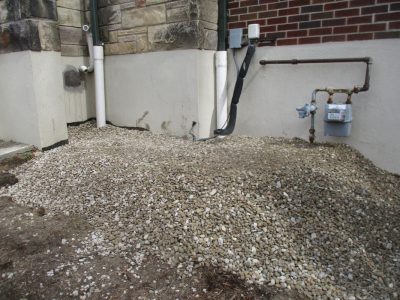
One of the most critical steps in our process is what goes back into the ground. Rather than backfilling with the original soil, which often traps moisture and settles, we used clean gravel. This provides superior drainage and creates a stable surface for the AC unit. The gravel ensures the unit won’t tilt or sink due to soil settlement, keeping the equipment level and problem-free for a lifetime. By following the engineer’s plan and using high-durability materials, we stabilized the garage and protected the neighborhood’s historic character.

If you have concerns about your foundation or retaining walls, contact us today for guidance.