Concrete Durability: The Engineering Behind the Build
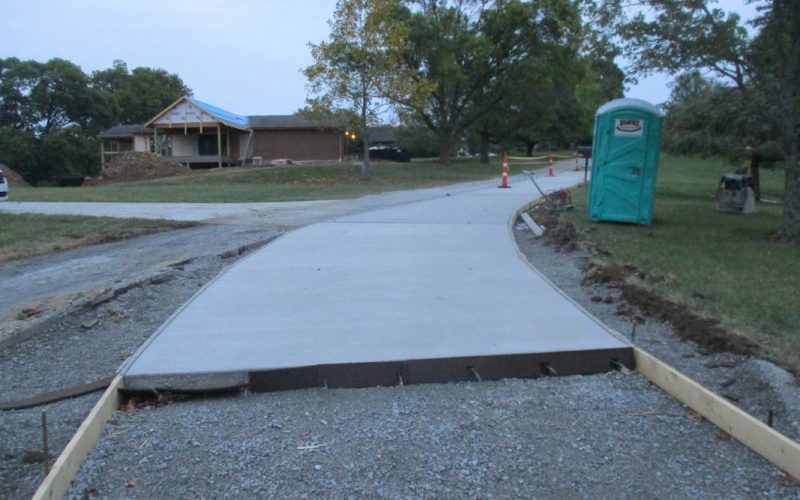
In the world of concrete—driveways, patios, and garage floors—most people focus on the thickness of the slab or the reinforcement inside. While these details matter, the true secret to long-term performance is the foundation. A concrete slab is only as stable as the ground supporting it.
Selecting the Right Reinforcement Strategy
Reinforcement is a tool, and like any tool, it must be matched to the specific demands of the project. At Hughes Construction, we don’t believe in a “one-size-fits-all” approach.
Steel Mesh and Rebar
Steel is a high-strength material, but its effectiveness depends entirely on where it sits in the slab.
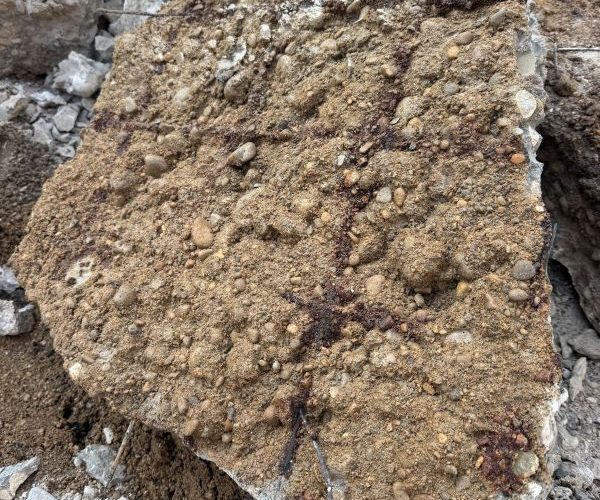
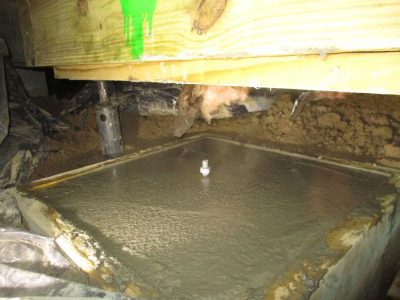
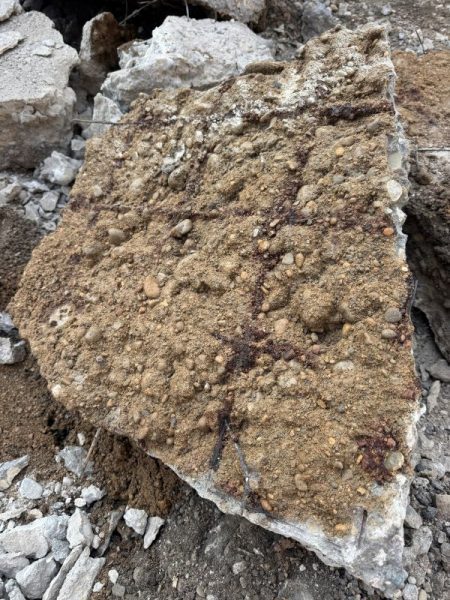
- The Placement Challenge: To be effective, steel must stay in the center of the concrete. During a pour, it is common for mesh to be stepped on and pushed to the bottom like in the below photo. If the steel ends up sitting in the dirt at the bottom of the pour, its structural benefit is essentially lost.
- Strategic Use: Steel always has its place. For example, we use heavy rebar at “cold joints” to tie separate panels together, ensuring they don’t pull apart or shift vertically over time. We also use rebar or mesh to “bridge” areas where underground utilities prevent us from digging a full-depth gravel base.
- Seal and Protect: Adding a sealant to your maintenance schedule every 5 years or so may help to extend the life of your concrete. Any professional concrete supplier should be able to assist you with choosing the best products for this task.
The Engineered Base: A Dual-Layer Approach
The primary cause of concrete failure in Cincinnati is our native clay soil. This soil acts like a sponge, expanding when wet and contracting when dry. To counteract this movement, we engineer a foundation that provides both structural support and drainage.
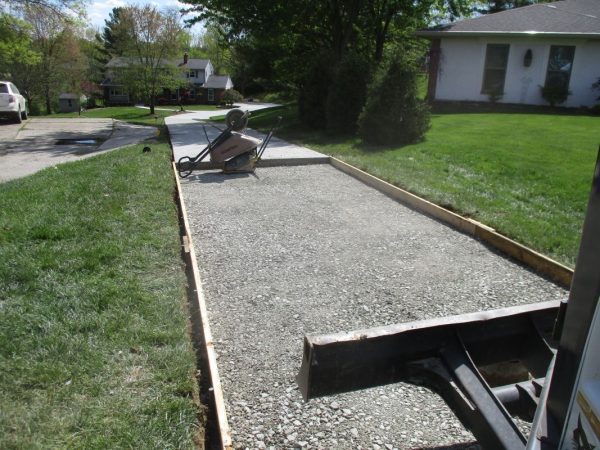
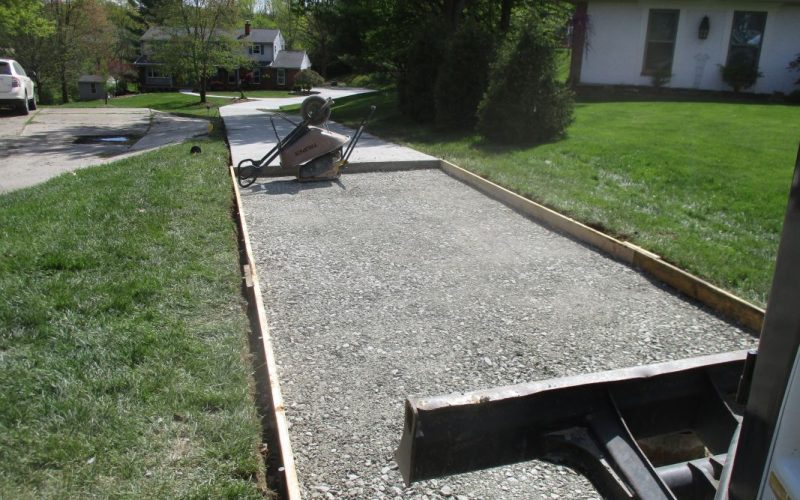
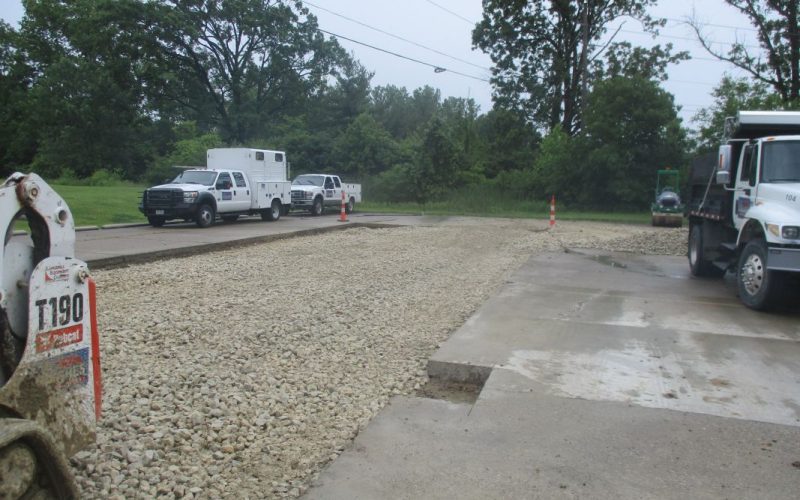
Instead of a single, thin layer of stone, we utilize a two-part gravel system:
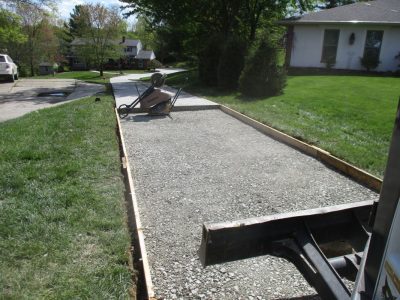
- A Structural Base of Large Gravel: This creates a rigid, unyielding floor that resists the shifting of the clay soil. Because these stones are larger, they also create “voids” that allow water to move freely under the slab rather than getting trapped—the primary cause of the “frost heave” that cracks driveways.
v
- A Fine-Gravel Leveling Layer: We finish with a smaller gravel base to create a perfectly compacted, uniform surface for the concrete to rest on.
Fiberglass Reinforcement
For all of our projects, we utilize fiberglass filaments mixed directly into the concrete at the plant.
- Integral Strength: Unlike mesh, which provides reinforcement in a single layer, fiberglass is spread through the entire thickness of the concrete. This helps catch micro-cracks before they can grow.
- Corrosion Resistance: Because fiberglass cannot rust, it is less vulnerable to the damage caused by Cincinnati’s road salts. This prevents “spalling,” where rusting steel expands and causes the concrete surface to flake and pop.
Expertise Over “Standard” Practices
Every property has unique challenges, from drainage patterns to buried utility lines. True durability comes from an engineered approach—knowing when to use steel and when to focus on your base.
Planning a concrete project? Contact us to discuss a foundation-first approach designed to handle Cincinnati’s toughest conditions.