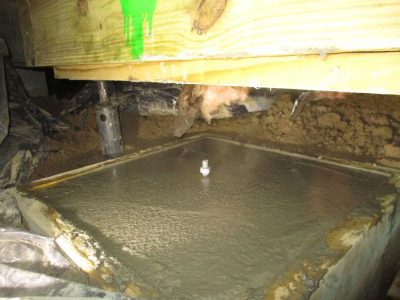
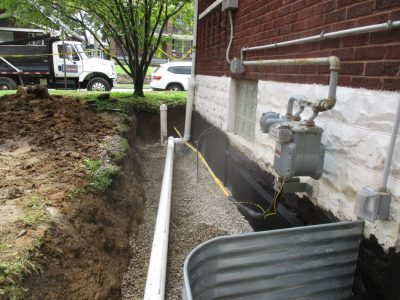
Last week, we explored using concrete piers to underpin a foundation for an addition. This week, we’re highlighting another effective method: helical piers. Both approaches are proven to stabilize foundations. Consulting with an engineer is essential to determine the best solution for your specific needs.
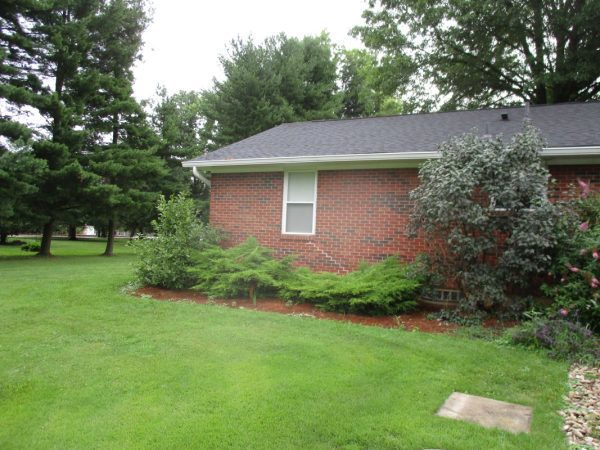
Foundation Settlement Issue
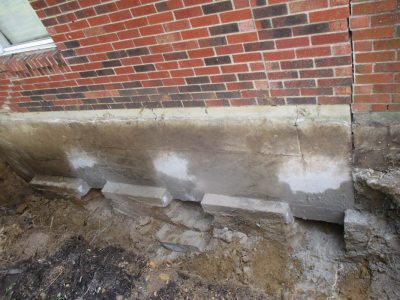
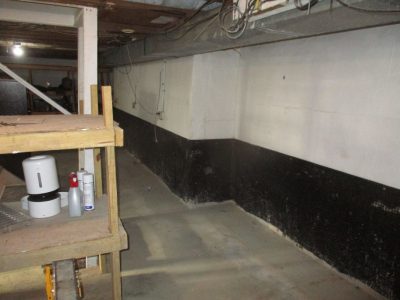
This one-story ranch-style single-family home was constructed in 1977 in a rural area near Pleasant Plain, Ohio. Originally built with a basement foundation, a later addition was built over a crawlspace. This resulted in vertical and stair-stepped cracks where the addition settled independently from the original structure.
Expert Consultation
Recognizing signs of foundation movement, the homeowner wisely sought expert advice. Structural engineer Mike Montgomery from Buyers Protection Group assessed the situation. Mr. Montgomery concluded that the shallow crawlspace couldn’t adequately resist movement caused by seasonal freeze/thaw cycles. This issue, commonly observed at Hughes Construction, underscores the risks of cutting corners on foundation depth to save costs, potentially leading to expensive repairs later on. We always recommend a full basement or consider using helical piers at the outset to mitigate these issues.
The Solution
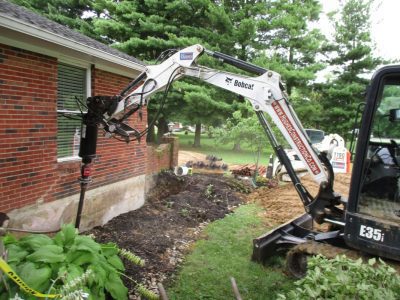
Mr. Montgomery recommended excavating the voids at the footing and filling them with dry-packed concrete. Additionally, he proposed installing 12 helical piers to support the structure. Hughes Construction, known for our expertise in helical pier installation in the Tri-State area, was entrusted with executing both repairs.
What are Helical Piers?
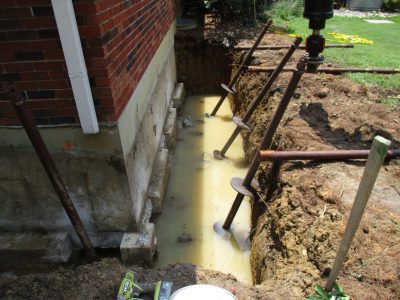
Helical piers are used to stabilize foundations. Consisting of round steel shafts with helical flights (like screws) that are drilled into the ground to stable soil. They are driven to specific torque settings that allow them to permanently support a substantial amount of weight immediately after installation.


Advantages of Helical Piers
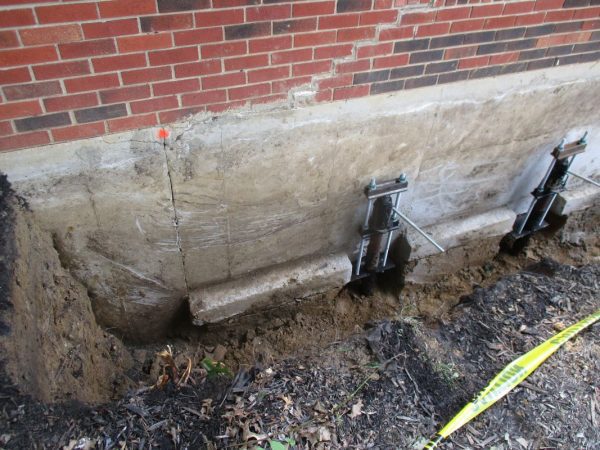
Helical piers offer advantages such as requiring minimal digging and immediate ability to bear a heavy load. They also feature bracket systems like the Tru-lift bracket, which allowed us to gradually lift the foundation, as depicted in the photo below.
Helical Piers Vs. Concrete Piers
Concrete piers or helical piers can be an excellent choice to support a foundation experiencing movement. It depends on what your home needs.
Concrete piers may be better for soil with a high amount of clay content since you replace much of the soil. Clay expands and contracts much more than regular soil, thus removing it would eliminate much of the problem. Helical piers, however, have the advantage over concrete piers if your good bearing soil is much deeper than expected. In that case, we can easily add extensions. Meanwhile, digging a fifty-foot hole for massive concrete piers would be an entirely different story.
Consulting with a qualified engineer is essential to ensure the chosen method aligns with the specific needs of your home or structure. Engineers can analyze soil reports, consider the structural load, and recommend the appropriate piering system. This assessment ensures the selected solution effectively addresses foundation movement or instability.
If you still aren’t sure if you need an engineer, please don’t hesitate to contact us via phone or our online contact form for expert guidance.